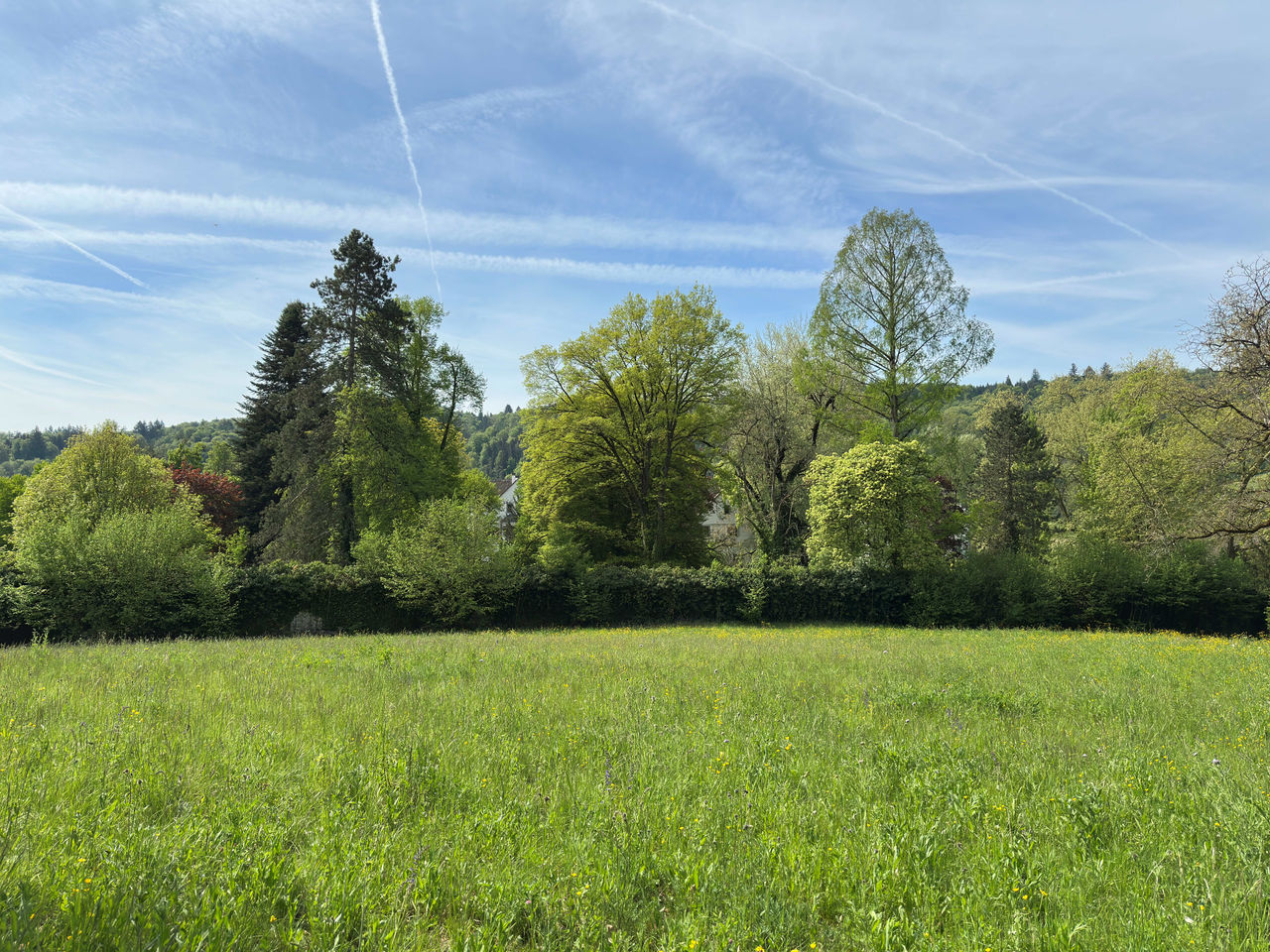
The Monastery Park: from a Hortus conclusus to an inviting arboretum
The Paradies monastery estate was founded in 1253 by the Counts of Kyburg and belonged to the Order of St Clare. The walled garden was the boundary between the nuns’ world and the outside world, and served as a site for kitchen and medicinal herb gardens, as well as fruit and vegetable gardens, the tending of which was part of the daily monastic duties. The present garden wall dates from the period when the monastery was rebuilt following the great fire of 1587. After the convent was dissolved in 1836, the complex functioned primarily as a farm. In 1918, Georg Fischer Ltd (GF) in Schaffhausen acquired the Paradies monastery estate along with the surrounding lands. In the mid-20th century, GF redesigned the almost perfectly square space by demolishing agricultural buildings, creating a park and planting an arboretum. With sixty tree species from across the northern hemisphere, from America to Japan, the monastery estate is now home to a unique collection of trees and continues to offer the contemplative tranquillity that was enjoyed here back in the 13th century.